
Sauerkraut is far more beneficial and delicious than fresh cabbage due to the fermentation process that the cabbage undergoes in brine. Due to lactic acid fermentation, sauerkraut is a very good natural probiotic, which is extremely beneficial for your intestinal health and, consequently, your overall health.
So how can we make sauerkraut at home?
First, you need to get some good-quality cabbage, preferably of the Balkan or Kyose varieties. White cabbage, which in recent years has been sold at very low prices in large chain stores, is also suitable for fermentation, but it takes a little longer to ferment.
Choose nice cabbages without any rotten spots. Depending on the container you will be using to store the cabbage, you need to decide how many kilograms to buy. For example, a 60-liter container can hold about 25-30 kg of cabbage, depending on the size of the cabbages and how tightly you pack them in the container you will be using.
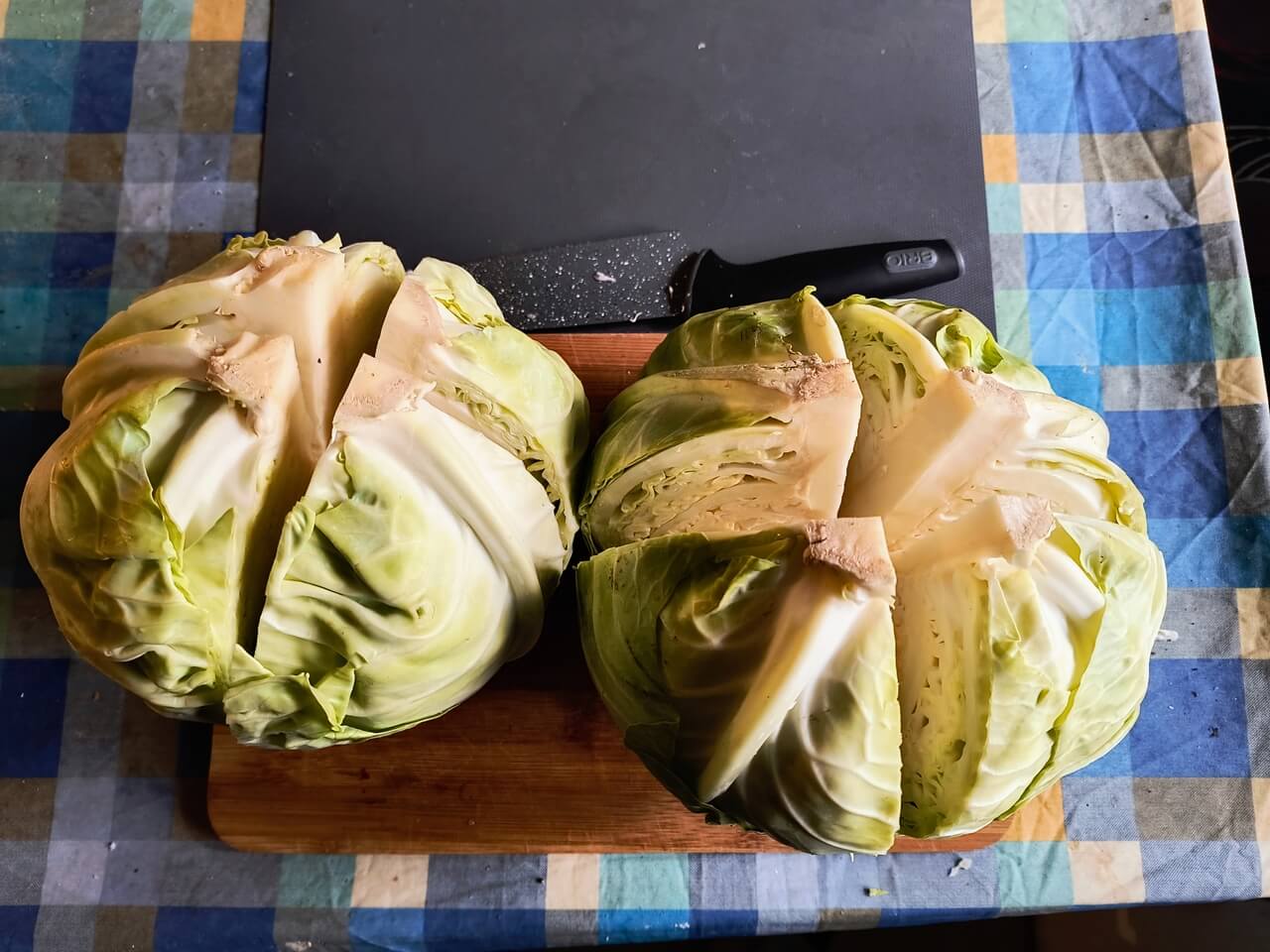
Cut the cabbages from the stalk to the middle of the cabbage. Arrange them in the container with the stalk facing upwards. Here is a photo showing how I cut the cabbages before arranging them in the container.
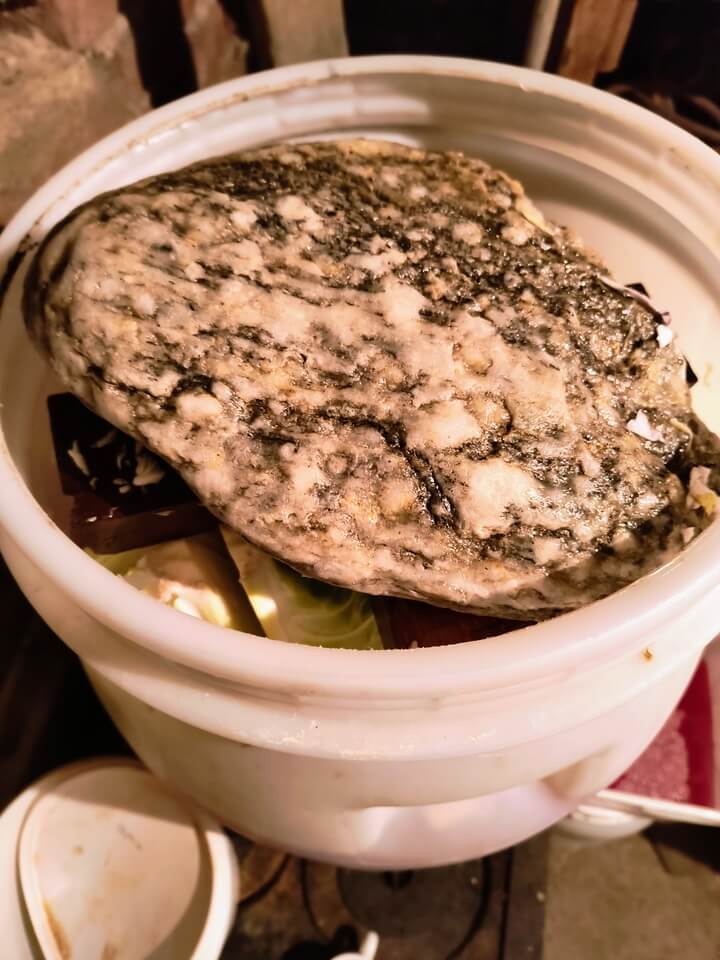
Once you have arranged the cabbage, it is time to add the brine. Some people add the brine a day or two or three after the cabbage has settled. I add it after arranging the cabbage, making sure that the brine level is a good foot below the top of the cabbage. Once it has settled, the brine level will rise and cover the cabbage. It is good to weigh the cabbage down with something heavy. I use a fir tree branch and place a stone on top of it.
The brine itself is very easy to prepare: you need a 4% salt solution, or in other words, add 40 grams of sea salt to a liter of water. A 60-liter container holds about 30 kg of cabbage and 30 liters of water, which means 30 x 40 grams = 1.2 kg of sea salt. This is how I do it: I fill a 5-liter container with water and add 200 grams of salt, stir well to dissolve the salt, and pour it into the barrel. I repeat this several times until the brine level reaches a few inches below the level of the cabbage.
To make the brine more reddish and the sauerkraut more sour, I add 1 or 2 colored cabbages, depending on their size, and one head of red beet. Separately, it is good to add 2-3 horseradish roots and a cob of hard corn to the barrel. A friend of mine also adds very small beetroot, saying that it works very well, but I have not tried it yet.
After you put the cabbage in, it is good to stir it. If your barrel has a spigot, drain a bucket from the bottom and pour it on top. This will add extra oxygen to the brine and improve the conditions for fermentation.
Once the sauerkraut is ready, you can drain it. If you have added horseradish to the cabbage, it acts as a natural preservative. Otherwise, most Bulgarians use sodium benzoate to preserve the cabbage, but I do not recommend it and do not use it. If you rely on chemicals for this, it is better to use potassium sorbate - it is much safer and non-toxic!
If you follow these simple steps, you will have delicious sauerkraut in a month or two.




Add new comment